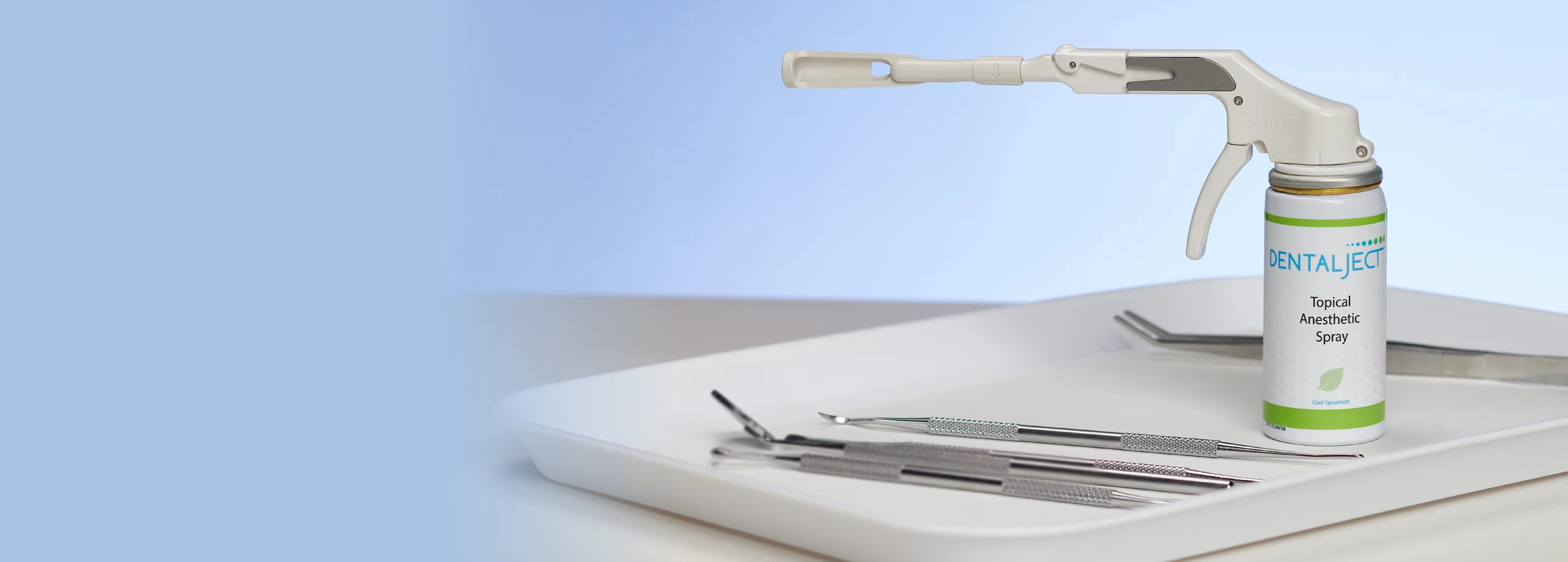
DentalJect
numbs the site
in 2 seconds
DentalJect uses a targeted cool gas to rapidly numb the mucosa (even in the most challenging and sensitive areas like the hard palate and posterior mandibular blocks) blocking local pain receptors so dentists can deliver a more comfortable injection.
There's no waiting between application and injection, saving 3-5 minutes of chair time per patient. Each canister provides up to 40 applications.
How the protocol works
Accurately applies a blend of coolant gas
A targeted nozzle delivers the cooling spray precisely where you need it, even at difficult sites like the hard palate and posterior mandibular blocks.
Numbs in 2 seconds
The cool gas rapidly numbs the mucosa, blocking pain receptors for a more comfortable injection.
No waiting between application and injection
Inject immediately, saving 3-5 minutes of chair time per patient and improving your workflow.
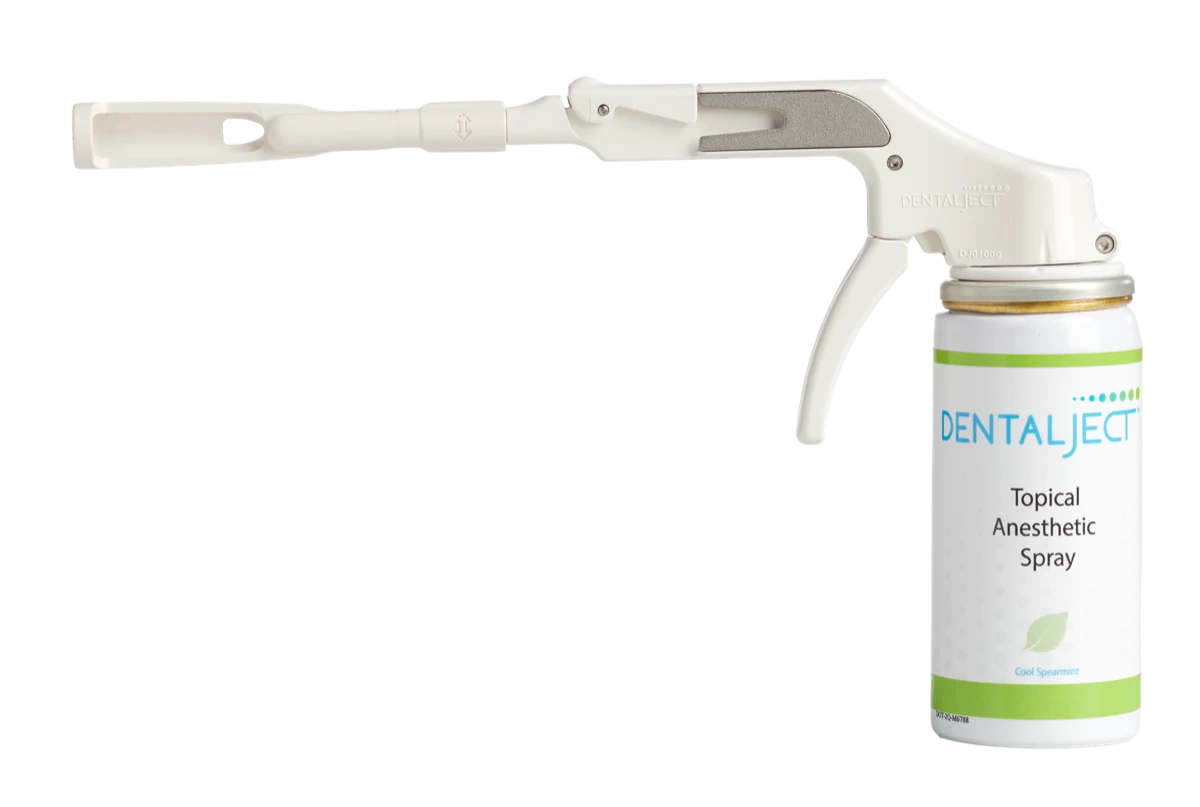
DentalJect Components
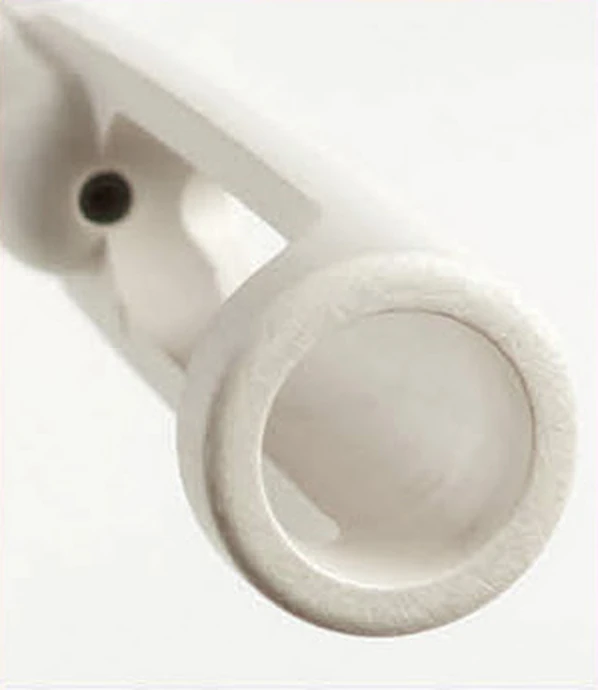
Rotatable Shielded Guide
Designed for precision and control, the applicator features an integrated distance guide for accurate delivery and a rotating shielded tip that helps protect sensitive tissues during targeted application.
Applicator
The Applicator has been ergonomically designed to ensure you deliver the spray precisely where you want it. No guessing, just point, spray, numb and inject!
Canister
Our proprietary drug-free coolant canister features an easy twist and lock attachment. Each canister contains up to 40 applications.
Same injection, better protocol
The old way
- Apply gel, then wait 2-3 minutes
- Anxious patients tense up and flinch
- Fear-driven cancellations hit your schedule
- Patients delay the treatment they need
The No-Wait Protocol
- Spray for 2 seconds, inject immediately
- A more comfortable, calmer patient
- Fewer cancellations, more completed care
- Higher treatment acceptance and referrals
Questions from the operatory
How does DentalJect fit into standard injection techniques like an IAN block or greater palatine nerve block?
DentalJect is designed as a rapid pre-treatment step that integrates into your existing workflow. Before an inferior alveolar nerve block (IANB/mandibular block), mental nerve block, or a highly sensitive greater palatine nerve block, apply the cooling spray directly to the target area. This triggers an immediate numbing effect on local pain receptors, allowing you to inject immediately with significantly reduced patient discomfort.
Can DentalJect be used for anterior middle superior alveolar (AMSA) injections?
Yes. The AMSA injection involves dense palatal tissue where traditional local anesthetic delivery can be particularly painful. Using DentalJect as a localized topical pre-treatment instantly cools and desensitizes the palatal mucosa, removing the primary barrier of needle-penetration pain. No other pre-treatment is needed prior to injection.
How does DentalJect compare to traditional benzocaine gel or Oraqix?
Unlike a traditional topical gel, which requires an inconsistent wait time, DentalJect uses a specialized cold spray that instantly numbs the site, eliminating the workflow bottleneck of waiting for gels to take effect before an injection. Unlike Oraqix or Cetacaine spray, DentalJect offers a rapid, drug-free cryotherapy approach to initial pain management with predictable execution.
Exactly how much chair time does the No-Wait Injection Protocol save?
Traditional pre-injection methods, such as benzocaine topical gels, require a slow wait time before the clinician can begin. DentalJect allows you to inject immediately after the spray application, saving 3 to 5 minutes of chair time compared with topical gel.
More clinical and patient questions are in the full FAQs.